






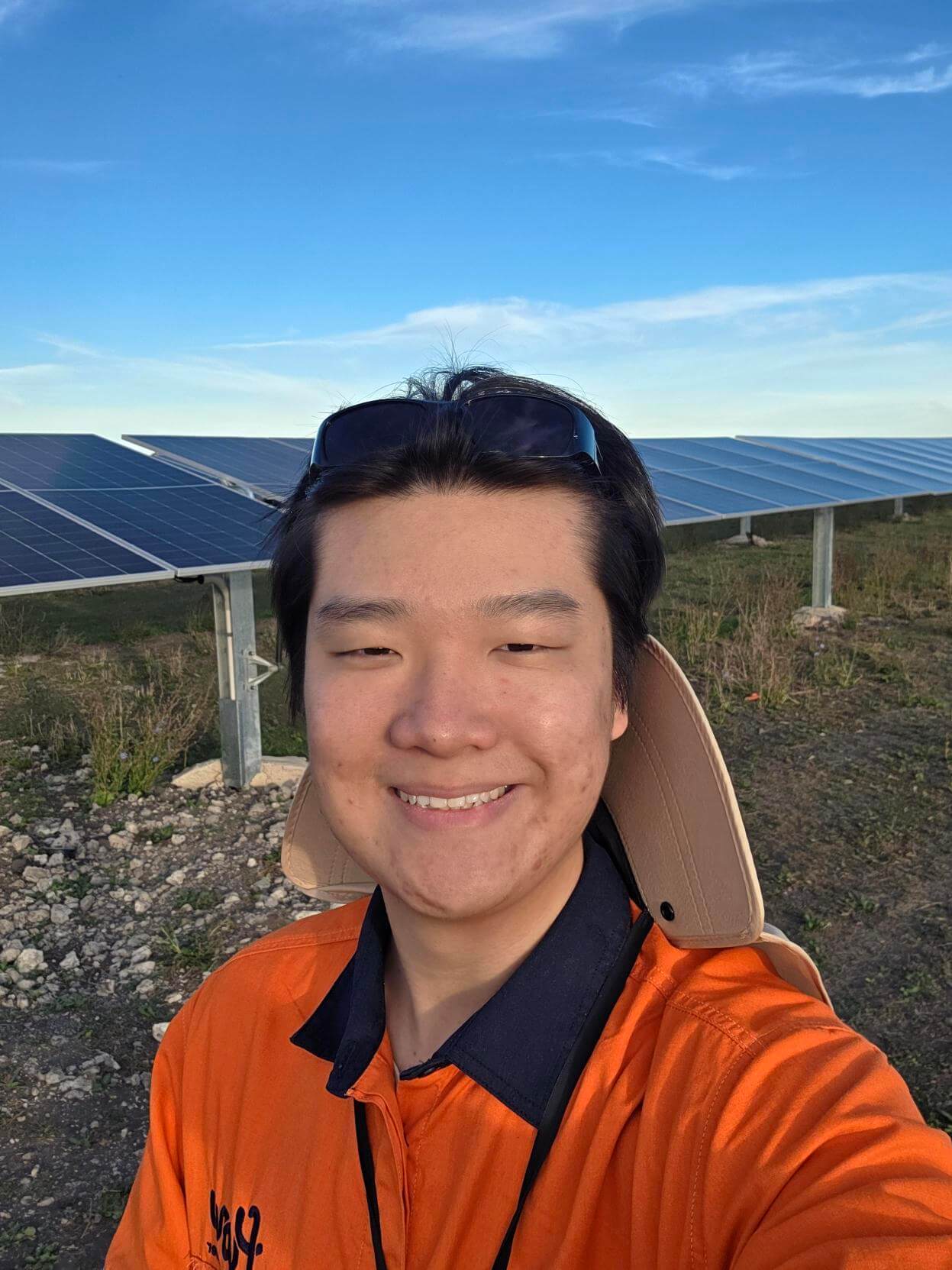
Darren’s curiosity about engineering was sparked by a toy car.
“When I was younger, I got a solar-powered car kit from an arcade prize counter. Seeing the sun move it felt like magic.”
That curiosity stayed with him through school, into university, and eventually led him towards a career in renewable energy engineering.
After five years at university studying a double degree in Electrical Engineering and Computer Science, including a thesis-heavy final year, Darren had a clearer sense of where he wanted to go.
Thesis research had been a valuable skill to learn, but his real interest was in practical engineering – solving problems, working with systems and seeing how projects come together in the field.
Finding Flow Power
While looking for the 60 days of industrial training he needed to complete his degree, Darren came across Flow Power and was drawn to its focus on renewable energy.
“I wanted to understand, holistically, how a solar farm actually works – from the solar modules to the inverters, and how energy is stored and exported.”
He also wanted to build practical skills, especially in engineering documentation: how to take design intent and turn it into drawings ready for development.
Hands-on learning opportunities
During his internship, Darren got to experience two different sides of the business, and how they come together to bring energy projects to life:
- Operations, maintenance and markets
In the first part of the internship, Darren was analysing SCADA data, working through large Excel files and supporting asset documentation and reporting. It was detailed, hands-on work, and it introduced him to a side of the industry he hadn’t expected.
Alongside technical data, Darren began to see the commercial and financial context behind energy assets. It helped him see how systems perform and how that work connects to project outcomes.
“I didn’t expect to learn so much about the financial side of engineering, but it gave me a much more complete view of how the projects actually work.”
- Engineering and design
Later, Darren shifted to design, where he focused on system drawings and DC single line diagrams.
It deepened his understanding of how different components work together across a solar farm, and how clear documentation supports the bigger picture.
This was where he says theory started to click into place.
One of Darren’s biggest takeaways was the difference between university learning and real-world engineering.
University gave him the theoretical fundamentals. The internship showed him what those fundamentals look like in practice – on site, in systems, in documentation and in day-to-day decisions.
Visiting Shoalhaven Solar Farm
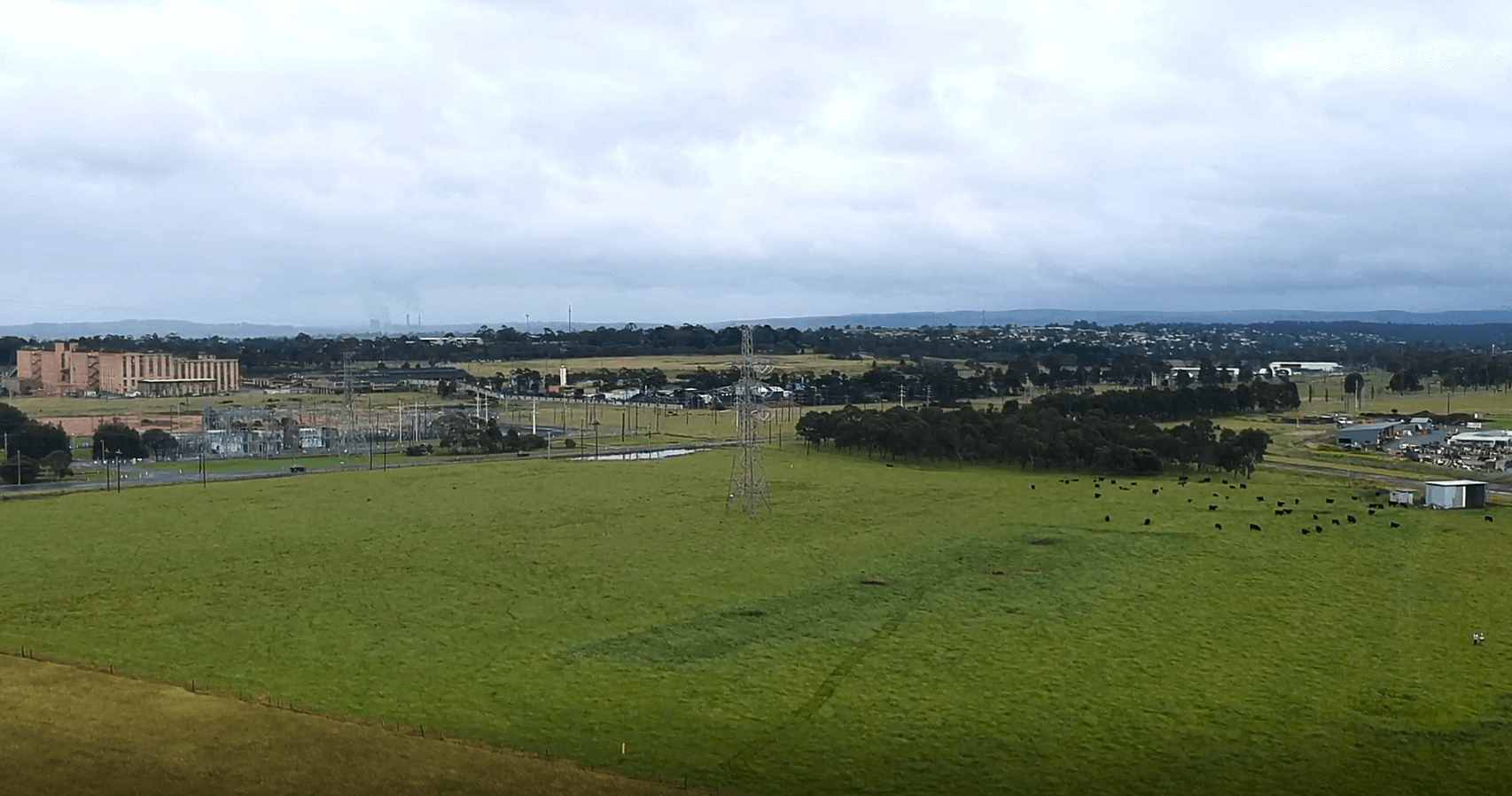
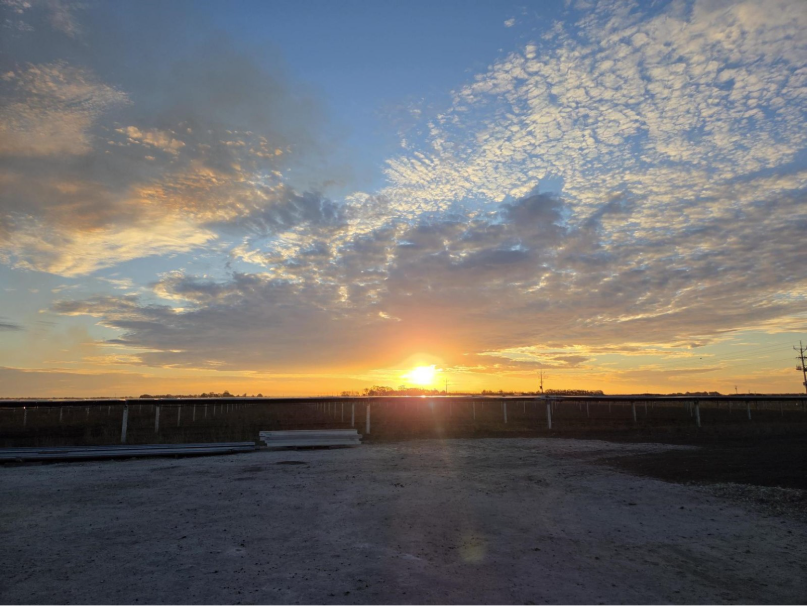
Darren’s first site visit was at Flow Power’s Shoalhaven Solar Farm.
“Seeing Shoalhaven Solar Farm in person was a surreal experience. I’d seen everything in pictures, but the scale just doesn’t hit the same until you’re there.”
Seeing the equipment up close unlocked a new level of understanding for Darren. The scale of the site, the inverters, and the wider system made the drawings and concepts from the office feel real in a completely different way.
Growing through challenges
Like many students entering the industry for the first time, Darren found the learning curve steep – not because of one specific task, but because there was so much new information to take in. There were systems to understand, tools to learn and a lot of context to absorb in a short period of time.
With patient guidance from mentors and an open team culture, Darren was able to build his knowledge steadily and gain confidence as he went.
“In the office, the company culture is very open. I get to learn a bit from everyone. In a sense, everyone there is like another mentor to me.”
Contributing to real projects
One of the most rewarding parts of the internship was seeing that his work had real impact.
“I’m really proud that some of the DC single line diagrams I worked on will actually be used as part of Flow Power’s long-term asset documentation.”
For an intern, that kind of contribution matters. It builds confidence, creates ownership and makes the work feel meaningful. Rather than sitting on the sidelines, Darren was contributing to real outcomes and seeing how his work fitted into larger projects and decisions.
“I remember thinking, ‘I’m actually doing valuable work here.’ That was a great feeling.”
What’s next for Darren?
The experience has helped Darren see engineering as a career built on continuous learning – and he’s already hit the ground running in his new role with Flow Power as a Graduate Project Engineer.
Looking ahead, he’s excited to deepen his understanding of inverter systems, fault-finding and diagnostics, spend more time solving problems on site, and eventually grow into a role where he can lead projects or take ownership of a solar asset.
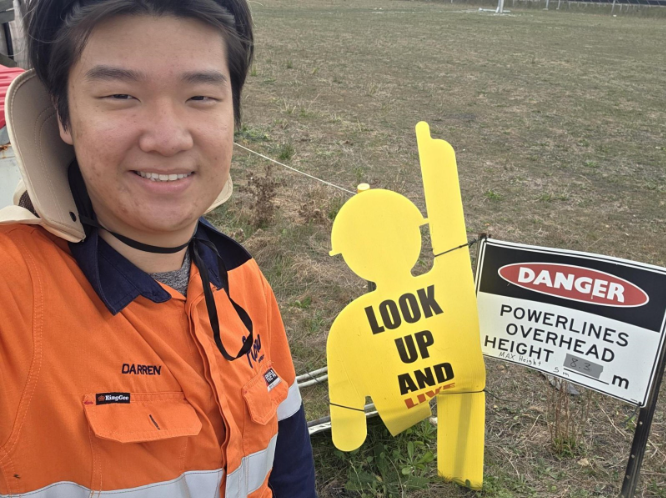
Thinking about an internship with Flow Power?
Darren’s advice for the next generation of engineers is simple: be thoughtful, be persistent and ask questions.
“Don’t be afraid to ask questions. Even if you think it’s a silly question, that’s often where the biggest growth happens.”
Darren’s story is a real-world example of curiosity turning into capability. From analysing operational data and creating drawings used in live projects, to site visits and mentorship from experienced engineers, the experience gave him a clearer view of both the industry and his future in it.
“It changed how I think about engineering. I used to think engineers were meant to know everything, but a lot of it is really about investigating, asking questions and finding what works.”
Learn more about the projects behind the experience
Want to know more about the projects Darren and our specialist team are bringing to life?
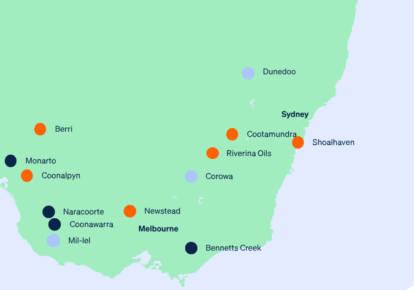
From Shoalhaven to Streaky Bay, we’re building innovative renewable projects to accelerate Australia’s clean energy transition.